Italy registered +350% e-buses in the first half of 2026, with BEVs accounting for 49% of the market and 78% of city buses
Electric buses accounted for nearly half of all new bus and coach registrations in Italy during the first half of 2026, with 1,587 units entering service as Next Generation EU-funded deliveries were completed before the June deadline. Italy’s bus market recorded an unprecedented first half of the year, with 3,241 buses above 8 tonnes GVW […]
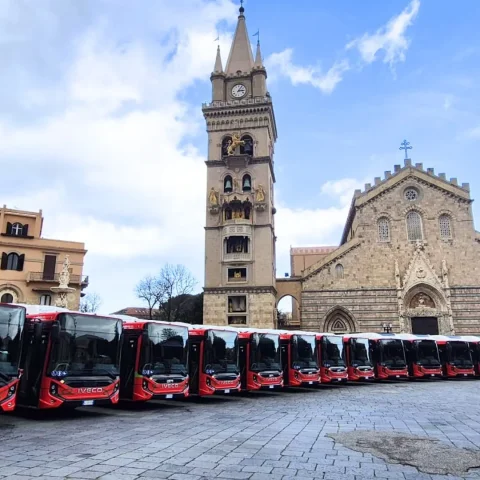
Electric buses accounted for nearly half of all new bus and coach registrations in Italy during the first half of 2026, with 1,587 units entering service as Next Generation EU-funded deliveries were completed before the June deadline.
Italy’s bus market recorded an unprecedented first half of the year, with 3,241 buses above 8 tonnes GVW registered between January and June 2026, according to ANFIA data covered on Italian trade media (and our sister platform) Autobusweb. The figure represents a 66% increase compared to the 1,954 registrations recorded in the same period of 2025.
For the first time, diesel was no longer the dominant propulsion technology. Diesel registrations totalled 1,111 units, including 28 biodiesel-powered Iveco buses, corresponding to a 34.3% market share.
Electric buses account for 49% of Italy’s new bus market
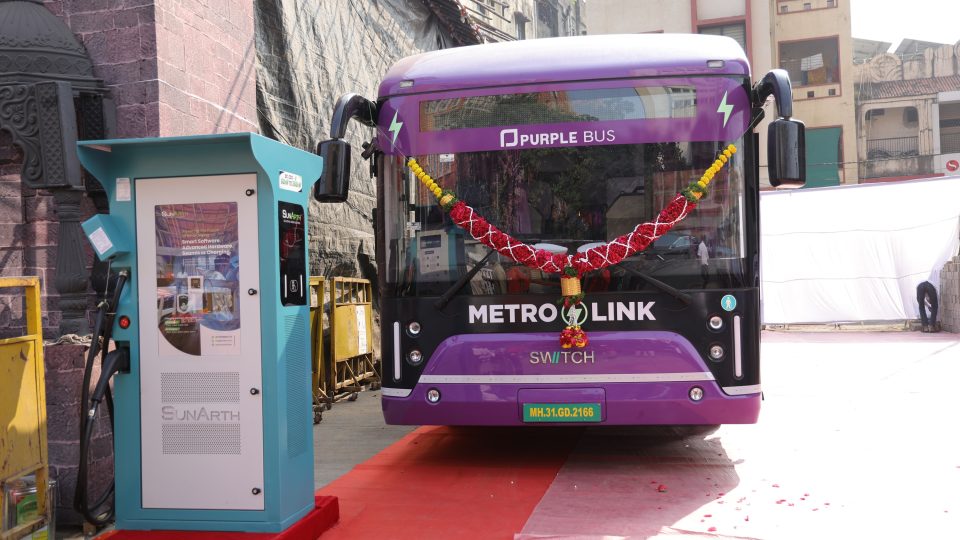
Battery-electric buses represented the largest propulsion technology in the Italian bus market during the first six months of 2026. A total of 1,587 BEVs were registered, compared with 353 in the first half of 2025, accounting for 49% of all new bus registrations.
Urban buses continued to drive electrification. Of the 1,941 Class I buses registered during the period, 1,519 were battery-electric, meaning that 78% of newly registered city buses were zero-emission. The urban segment itself expanded sharply, with registrations increasing by 148.5% year-on-year from 781 to 1,941 vehicles.
In brief
- How many battery-electric buses were registered in Italy in H1 2026? A total of 1,587 BEVs were registered, representing 49% of the overall bus market.
- What share of new urban buses were electric? Battery-electric buses accounted for 1,519 of the 1,941 new Class I buses registered, equal to 78%.
- How many electric intercity buses entered service? Italy registered 68 battery-electric Class II buses during the first half of 2026, all Iveco Crossway models.
- Which manufacturer led the electric bus market? Iveco Bus ranked first with 889 battery-electric bus registrations, ahead of BYD (218) and King Long (107).
Electric mobility also continued to expand into the Class II segment. A total of 68 battery-electric intercity buses were registered during the first half of the year, all of them Iveco Crossway models.
Hydrogen buses also posted significant volumes, with 179 fuel cell buses registered, representing 5.5% of the overall market.
Compressed natural gas (CNG) and LNG buses accounted for 301 registrations, down from 506 one year earlier and representing 9.3% of the market. Hybrid buses also declined substantially, with 69 registrations compared with 203 in the first half of 2025, reducing their market share to 1.9%.
Iveco Bus leads overall and electric bus rankings
Iveco Bus remained the largest manufacturer in the Italian market with 1,325 registrations, corresponding to a 40.9% market share. Daimler Buses ranked second with a combined 298 Mercedes-Benz and Setra buses, followed by Solaris with 233 registrations.
Chinese manufacturer BYD ranked fourth overall with 218 registrations, all of them battery-electric buses, representing a 6.7% market share. Scania followed with 200 buses, ahead of MAN with 194.
In the battery-electric segment alone, Iveco Bus led with 889 registrations, accounting for 56% of all electric buses registered in Italy during the first half of 2026. BYD followed with 218 units (13.7%), ahead of King Long with 107 buses. Yutong registered 80 electric buses, closely followed by CRRC with 79 units, while Solaris completed the top six with 55 registrations.