Daimler Buses plans third public charging location for electric buses at Hamburg ZOB
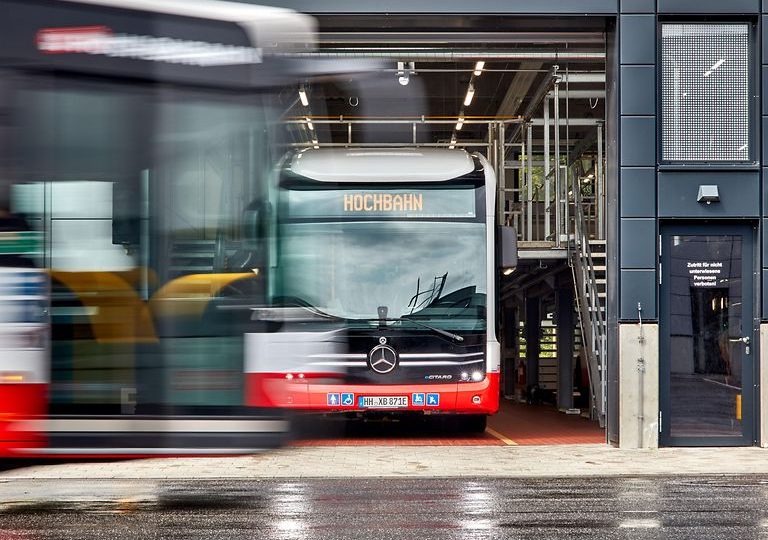
Daimler Buses plans to open its third public charging location for electric buses at Hamburg Central Bus Station in 2027. The manufacturer has signed a lease agreement with ZOB Hamburg GmbH, with the approval of the municipal owner, and has submitted the building permit application for the installation. According to Daimler Buses, the initial configuration […]
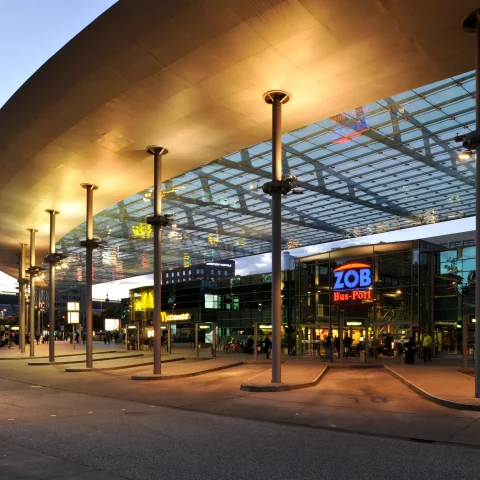
Daimler Buses plans to open its third public charging location for electric buses at Hamburg Central Bus Station in 2027.
The manufacturer has signed a lease agreement with ZOB Hamburg GmbH, with the approval of the municipal owner, and has submitted the building permit application for the installation. According to Daimler Buses, the initial configuration will comprise four fast-charging stations, with the possibility of expanding the site to as many as eight charging points.
Daimler Buses first announced in October 2025 that it would build and operate its own brand-neutral public charging stations for electric buses and coaches, starting with four fast-charging points at Buspark Cologne. The Hamburg project then follows charging infrastructure projects announced in Cologne and Munich, the latter announced in February 2026, and will be implemented and operated by Daimler Buses Solutions GmbH, the manufacturer’s wholly owned infrastructure subsidiary.
Daimler Buses public charging network expands to Hamburg ZOB
According to Daimler Buses, the Hamburg Central Bus Station records more than 80,000 bus movements annually and is one of Germany’s largest long-distance bus hubs.
The company says central bus stations allow charging to take place during scheduled intermediate or terminal stops. Passenger facilities, including restrooms and food services, are already available at the Hamburg site.
Daimler Buses Solutions will provide the infrastructure without requiring ZOB Hamburg GmbH to invest in the charging equipment or manage its technical operation. The subsidiary will refinance the project through the sale of charging electricity and will handle maintenance and technical operations through its own service team after commissioning.
Up to 600 kW charging power for electric buses in Hamburg
The planned charging stations at ZOB Hamburg will provide outputs of up to 600 kW and will be accessible to electric buses regardless of vehicle brand, Daimler Buses states. Electricity supplied through the infrastructure will come exclusively from renewable energy sources.
The construction programme includes civil engineering work, the installation of high-voltage power cables, construction of a transformer and installation of the charging equipment.
The first phase provides for four fast-charging stations. The site is designed to allow subsequent expansion to a maximum of eight charging points.
Daimler Buses says its subsidiary is continuously assessing further public charging locations at highly frequented sites. Property owners, operators and long-term users of locations regularly served by intercity buses and coaches can submit potential sites to Daimler Buses Solutions.
Charging infrastructure accompanies eIntouro rollout
Daimler Buses also links the public charging programme to the Mercedes eIntouro, its first electric intercity bus. The model has been available to order since spring 2025, with the first customer handover scheduled for the coming weeks.
The eIntouro is intended for intercity routes connecting urban and rural areas as well as excursion services and shorter trips.
The company says it is investing through Daimler Buses Solutions in the expansion of its infrastructure activities over the coming years. Daimler Buses is currently the only European bus manufacturer building and operating its own public charging stations for electric buses.
In brief
- Where will Daimler Buses build its next public charging site?
At Hamburg Central Bus Station, following projects in Cologne and Munich. - How many charging points are planned in Hamburg?
Four fast-charging stations initially, with an option to expand to as many as eight charging points. - What charging power will be available?
Daimler Buses plans charging stations with outputs of up to 600 kW, open to electric buses of all brands. - When is commissioning scheduled?
The Hamburg charging infrastructure is scheduled to enter operation in 2027.
Steffen Germ, CEO Daimler Buses Solutions, says: “Public charging infrastructure for electric buses is a key enabler of the electrification of excursion and coach travel. With our charging projects in Cologne, Munich, and Hamburg, we aim to provide an important boost for the use of electric buses on key travel routes across Germany. Buses can charge where they already stop according to schedule. This makes integration into existing operations easier and helps our customers use electric buses efficiently and economically.”