Germany plans to cut e-bus funding by two-thirds in 2027 draft budget, from €403m to €130m
Germany’s draft 2027 budget would reduce funding for the purchase of buses with alternative drivetrains from €403 million to €130 million, according to the federal government’s proposed Climate and Transformation Fund (KTF). The German federal government has presented the draft economic plan for the Climate and Transformation Fund (KTF), introducing significant changes to transport-related spending. […]
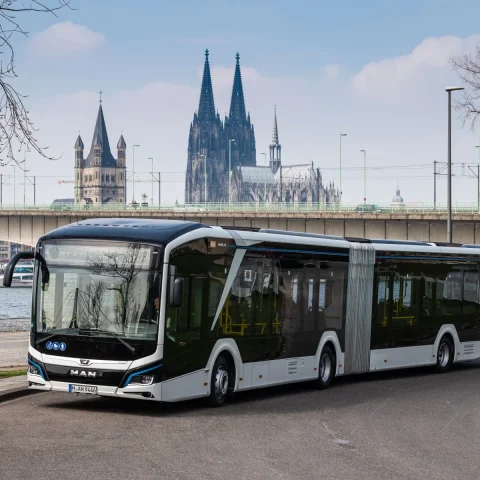
Germany’s draft 2027 budget would reduce funding for the purchase of buses with alternative drivetrains from €403 million to €130 million, according to the federal government’s proposed Climate and Transformation Fund (KTF).
The German federal government has presented the draft economic plan for the Climate and Transformation Fund (KTF), introducing significant changes to transport-related spending. According to reporting by elektro-auto.news, funding dedicated to the procurement of buses with alternative drivetrains would fall from more than €403 million in 2026 to around €130 million in 2027, representing a reduction of almost 68%. The proposal is part of the wider federal budget package, which still requires parliamentary approval.
The KTF’s overall programme expenditure would increase to around €40.3 billion in 2027. However, the “Climate-friendly Mobility” budget would decrease from just over €4 billion to approximately €3.6 billion. At the same time, the government plans to redirect €2.7 billion in revenues from the European Emissions Trading System (ETS) away from the Climate and Transformation Fund and into the general federal budget, a measure the government considers appropriate because climate-related expenditures are also financed through the core budget, as reported by elektro-auto.news.
German fundings for electric buses, from 2021
Germany’s federal funding program for alternative drive systems in public buses, launched in 2021, has supported more than 5,300 buses approved for funding across around 330 public transport operators. More than 2,300 vehicles are already in operation. In spring 2026 Germany’s transport ministry has launched a new funding programme aimed at supporting the deployment of at least 1,500 additional electric buses, following announcement earlier this year.
In early 2024, the funding program was halted, with concerns arising on the development of the zero emission bus market in the country. According to the VDV, halting federal subsidies “put conversion of 10,000 buses to zero emission at risk”.
In brief
- How much would e-bus funding be reduced?
The draft budget lowers funding for buses with alternative drivetrains from €403 million in 2026 to €130 million in 2027. - Are all mobility programmes being reduced?
No. Purchase incentives for electric passenger cars would increase to €803 million, while charging infrastructure funding would remain broadly stable. - Why is the proposal attracting attention?
Electric bus procurement is among the programmes facing the largest percentage reduction within the mobility budget. - What does BDEW request?
The association calls for maintaining bus procurement support at previous levels while making the funding programmes more permanent.
Electric buses and trucks among the largest cuts in German budget
In 2025, nearly half of newly registered city buses in Germany were zero-emission vehicles. Germany’s public transport sector added 1,397 emission-free buses in 2025, bringing the total fleet to 4,752 vehicles in operation nationwide, according to PwC’s E-Bus Radar 2026. The data positions electric drivetrains at around 14% of the country’s city bus fleet of approximately 35,000 units. According to the report, German operators have outlined procurement plans for around 6,400 additional zero-emission buses by 2030, bringing the total fleet to over 11,000 vehicles (a substantial increase compared to the 8,500 forecasted in 2023 by the same PwC).
Back to the draft budget proposal, purchase incentives for passenger electric vehicles would increase from €550 million in 2026 to €803 million in 2027, commercial vehicle programmes would face substantially deeper reductions.
The federal government is slowing down the rollout of electric bus fleets. Sending transport companies back into new procurement processes after a long period of uncertainty, and then cutting funding to a third, is acting in a contradictory manner from both an economic and transport policy perspective. This weakens investments in vehicles, workshops, and charging infrastructure, while simultaneously depriving manufacturers and suppliers in Germany and Europe of the planning certainty they need for capacity expansion, innovation, and job creation
Ingo Wortmann, President, VDV
Germany’s public transport association VDV has urged lawmakers to revise the proposal during the parliamentary process. In a statement released on July 20, the association described the planned reduction as a setback for investment in public transport, arguing that it would affect not only vehicle procurement but also depot upgrades, workshops, charging infrastructure, grid connections and workforce training. The VDV also pointed to the lower multi-year funding commitments included in the draft budget, which allocate €20 million for 2028, €32 million for 2029, €48 million for 2030 and €100 million for 2031. According to the association, these figures do not provide a sufficient basis for the continued deployment of zero-emission bus fleets, and it called on the Bundestag to restore funding for buses with alternative drivetrains to a more stable level.
VDV President Ingo Wortmann states: “The federal government is slowing down the rollout of electric bus fleets. Sending transport companies back into new procurement processes after a long period of uncertainty, and then cutting funding to a third, is acting in a contradictory manner from both an economic and transport policy perspective. This weakens investments in vehicles, workshops, and charging infrastructure, while simultaneously depriving manufacturers and suppliers in Germany and Europe of the planning certainty they need for capacity expansion, innovation, and job creation. The transition to zero-emission bus fleets is not an isolated project. It involves transforming entire operating systems along our value chain. If the federal government repeatedly restarts, narrows, or eliminates funding programs, investments are delayed, made more expensive, and their implementation is hampered”.
DVF and BDEW associations against the KTF proposal
According to German trade publication Die Rote Renner, the German Transport Forum (DVF) has criticised the proposed budget, arguing that redirecting €2.7 billion in revenues from the European Emissions Trading System (ETS) from the Climate and Transformation Fund (KTF) to the federal budget weakens the fund’s role as a long-term investment instrument. The DVF warns that the share of KTF resources allocated to mobility would fall from 13% in 2026 to below 10% in 2027, while funding for public transport fleet modernisation would be cut by almost two-thirds. The organisation has therefore called on the federal government to strengthen the KTF and restore funding levels to support the transport sector’s transition.
Funding allocated to charging and refuelling infrastructure would remain comparatively stable at €1.63 billion, around €82 million below the previous year’s level.
The draft budget has already prompted reactions from industry. In a statement issued after publication of the KTF draft, the German Association of Energy and Water Industries (BDEW) welcomed the fact that the overall Climate and Transformation Fund will not shrink as initially anticipated, while expressing concerns about reductions affecting specific programmes.
Regarding transport, BDEW argues that existing bus support programmes should be maintained at their current level and made permanent, while adding that charging infrastructure has reached a level of market maturity where public subsidies could be reduced more readily than vehicle procurement support.
The draft budget is now entering the parliamentary process, where amendments remain possible before final approval.